Automated drone cleaning systems: the future of industrial asset maintenance in 2026
A technical analysis of how automated drone systems are revolutionizing high-pressure cleaning and diagnostic maintenance for industrial infrastructure.
The evolution of industrial maintenance: why automation is mandatory
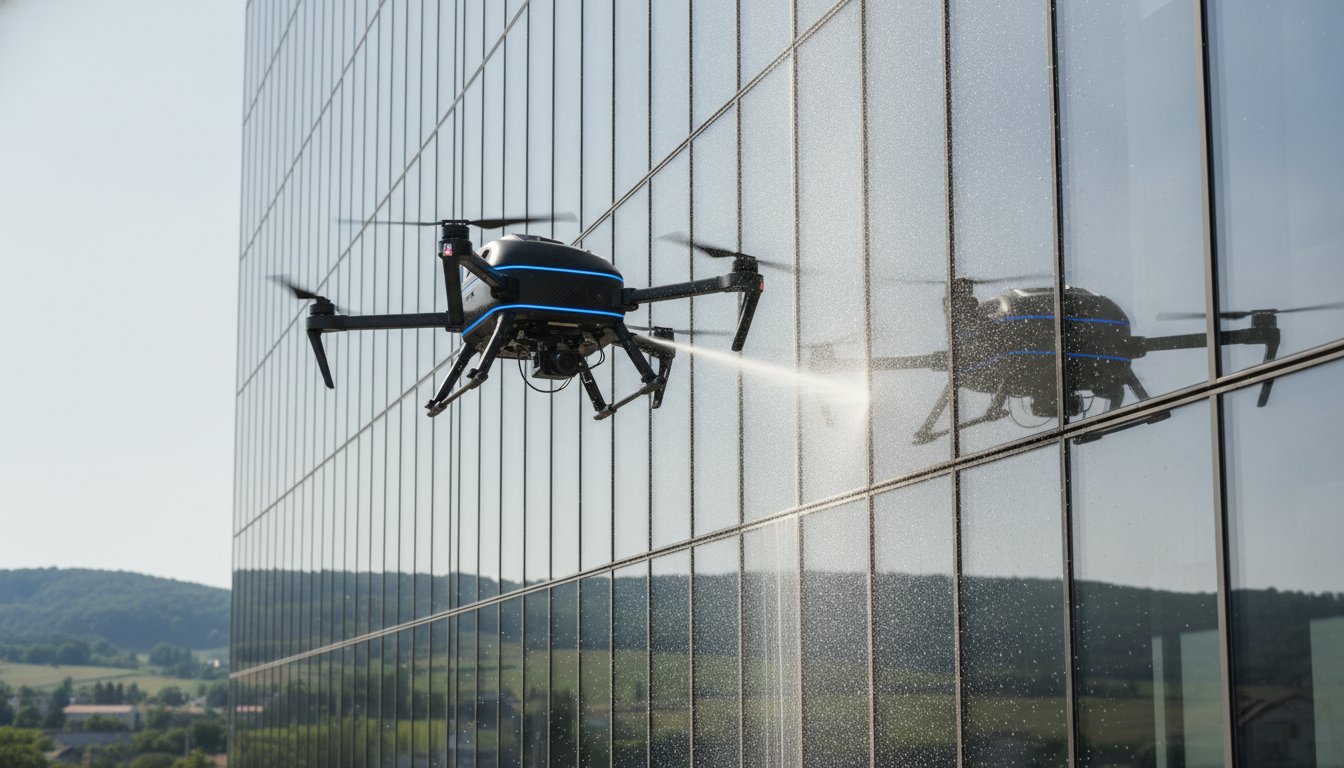
The paradigm of industrial asset maintenance is undergoing a fundamental transformation, driven by the technical and economic limitations of conventional methods. By 2026, the adoption of automation is no longer an option but a mandatory requirement for maintaining the operational integrity and safety of large-scale infrastructure. At the forefront of this shift are automated drone cleaning systems, which represent a significant leap beyond rudimentary aerial platforms. These are not merely drones with cleaning attachments; they are integrated, closed-loop systems comprising advanced sensors, proprietary flight control software, and high-pressure hardware engineered for precision and stability.
Defining the system: an automated drone cleaning system is a cyber-physical platform where flight paths, standoff distances, and cleaning parameters are algorithmically determined and executed. This closed-loop control ensures consistent results by continuously adjusting to environmental variables and surface geometries — a level of precision unattainable through manual operation.
Limitations of traditional methods: scaffolding and rope access for high-altitude maintenance present escalating challenges. They are labour-intensive, introduce significant fall risks, and often require operational shutdowns that cause substantial productivity losses. Their logistical complexity and inability to provide verifiable, uniform cleaning quality render them increasingly obsolete for assets like extensive solar parks or high-rise logistics hubs.
Economic drivers: rising costs for specialised manual labour, combined with escalating insurance premiums for high-risk work at height, are eroding the cost-effectiveness of traditional approaches. Automated systems require an initial investment but deliver a superior long-term return through higher efficiency, reduced downtime, and lower liability exposure.
Regulatory shifts: evolving EU safety standards and occupational health regulations create a strong incentive to remove personnel from hazardous, high-altitude environments. Mandates that prioritise engineered controls over personal protection are accelerating adoption of drone-based solutions that keep human operators safely on the ground.
The shift from reactive to predictive cleaning
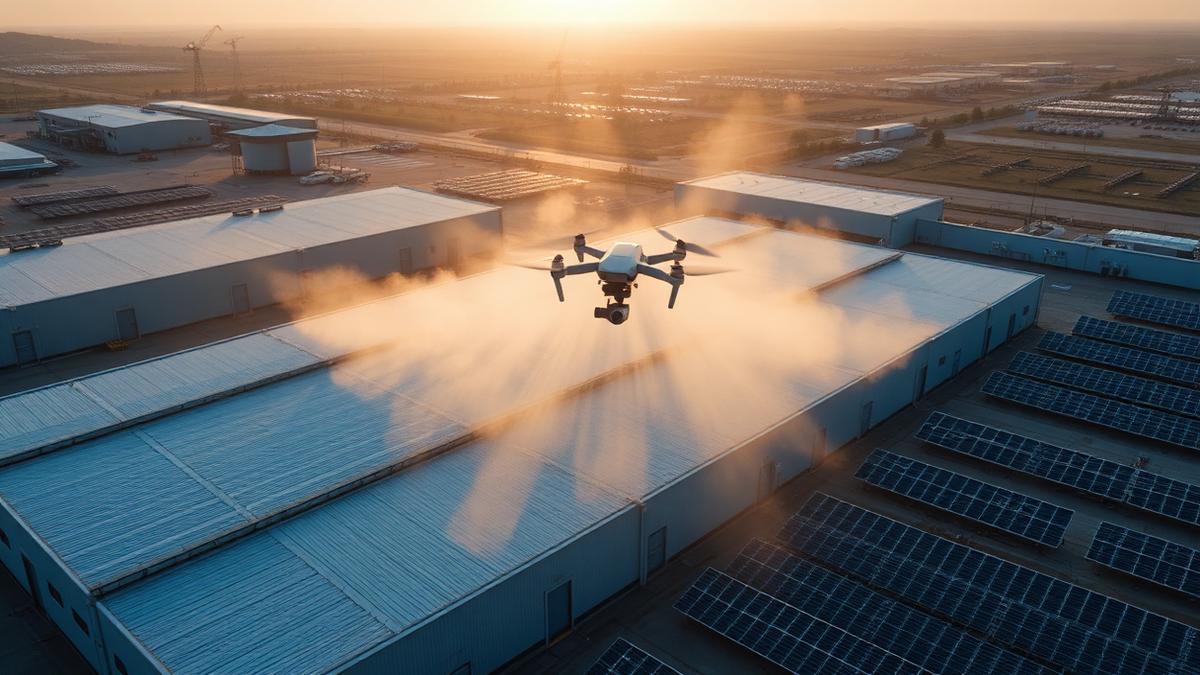
The integration of data analytics into automated drone cleaning systems enables a strategic transition from a reactive to a predictive maintenance model. Instead of cleaning on a fixed, often inefficient schedule, automated systems leverage historical performance data, environmental sensor inputs, and asset-specific soiling rates to determine optimal cleaning intervals. This data-driven approach ensures resources are deployed precisely when and where they are needed to prevent performance degradation, particularly for sensitive assets such as photovoltaic installations.
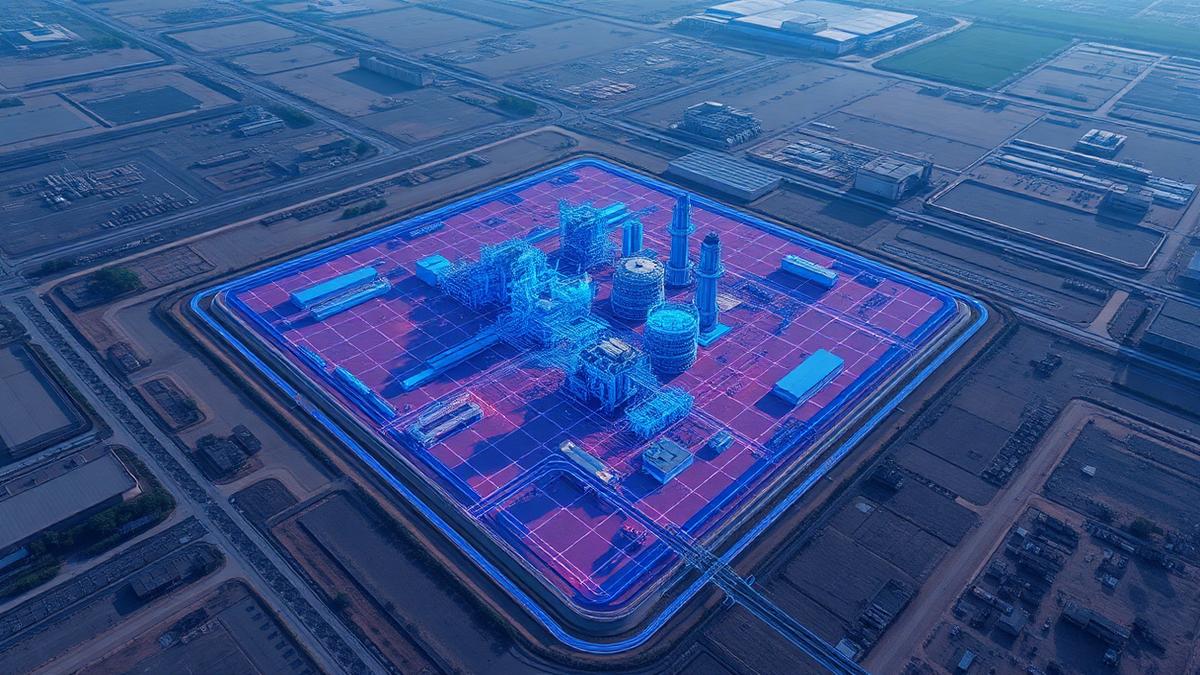
A core component of this predictive methodology is the use of digital twins — high-fidelity virtual models of the physical asset. These models are used to simulate and plan complex aerial cleaning paths, optimising water consumption, flight time, and energy usage before the drone is ever deployed. This level of planning maximises efficiency and minimises disruption to site operations.
The direct impact of consistent, algorithmically guided cleaning is a measurable extension of asset longevity. For building facades it prevents the corrosive buildup of pollutants; for solar glass it mitigates the abrasive effects of particulate matter, preserving surface integrity and operational lifespan.
Safety by design: eliminating fall risks
The most profound advantage of automated drone maintenance is the systemic elimination of human exposure to fall risks. By deploying unmanned aerial systems, facilities can implement a 'zero-height' personnel policy for high-altitude cleaning, where all operators remain on the ground. Safety by design is not an incidental benefit but a core architectural tenet of the technology.
The safety-by-design protocol in aerial maintenance is the formal process of engineering systems where human exposure to high-risk environments is eliminated through automation, rather than mitigated through personal protective equipment.
This proactive risk elimination has a direct financial impact. It leads to a quantifiable reduction in liability insurance premiums for industrial asset managers, as the highest-risk category of work is removed from their operational profile. It also de-risks the entire maintenance process and ensures compliance with the most stringent safety regulations.
Technical architecture of automated drone cleaning systems
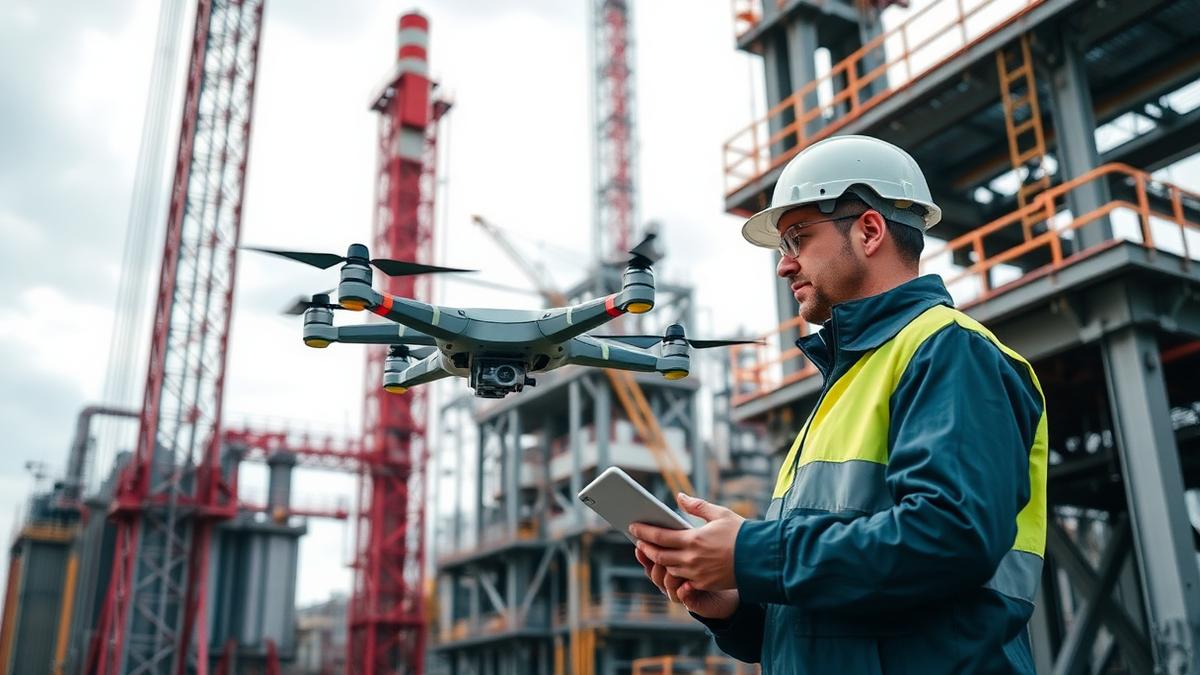
The operational efficacy of an automated drone cleaning system is not derived from a single component but from the seamless integration of its technical architecture: sophisticated software, robust hardware, and multi-modal sensor data working together to achieve autonomous operation with centimetre-level precision. Unlike consumer-grade drones, these industrial systems are engineered from the ground up for the physical and navigational challenges of high-pressure washing at height.
Proprietary flight software: the brain of the system enables autonomous navigation, real-time obstacle avoidance, and execution of pre-programmed cleaning patterns. It processes data from multiple sensors to maintain a precise standoff distance from a surface, adjusting for wind gusts to ensure uniform application of pressure and cleaning agents.
High-pressure delivery systems: a primary engineering challenge is managing the significant recoil generated by high-pressure water discharge. The airframe, propulsion, and flight controller are designed for stable flight under these dynamic loads, using recoil management algorithms and hardware dampening that prevent deviation from the programmed flight path.
Sensor fusion: LiDAR provides detailed 3D mapping of the target structure, GPS/RTK delivers precise global positioning, and ultrasonic sensors offer close-range proximity detection. This fused data creates a comprehensive environmental model for safe, accurate navigation in complex industrial settings.
Power management: tethered systems receive continuous power and water from a ground station, enabling uninterrupted flight for extended periods — ideal for large facades or structures. Battery-operated systems offer greater mobility for geographically dispersed assets such as solar parks, with rapid-swap battery technology minimising downtime.
Algorithmic flight path optimisation
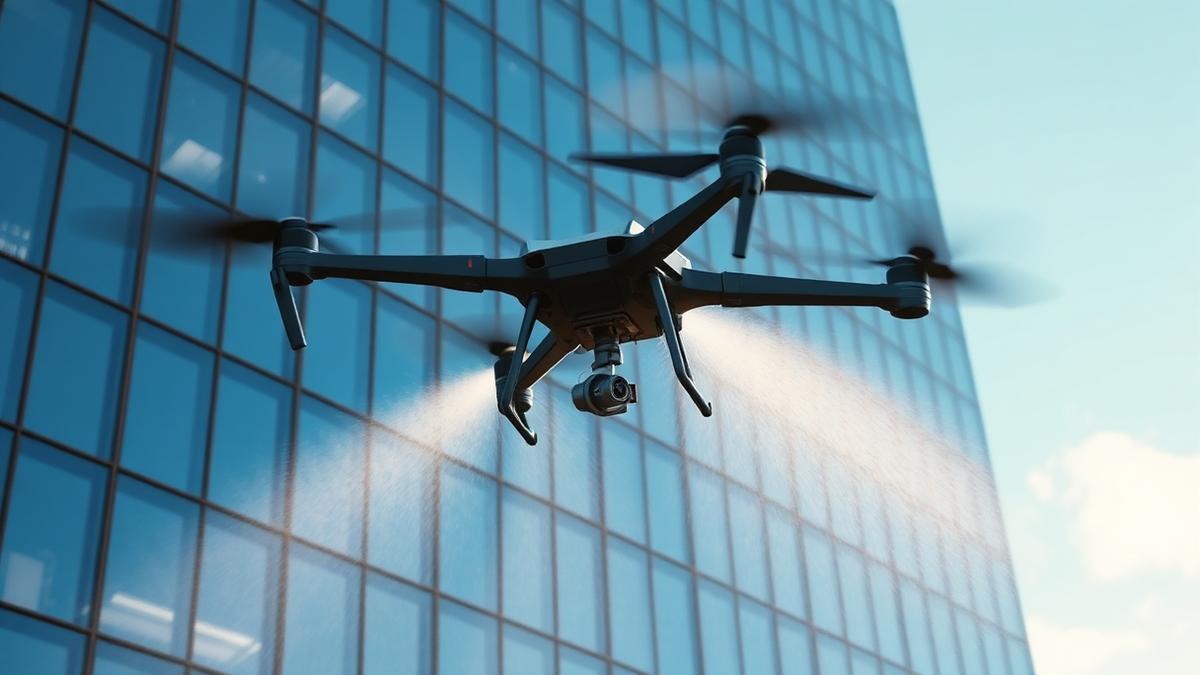
The intelligence of an automated drone cleaning system resides in its ability to optimise every aspect of the cleaning process. The proprietary flight software uses advanced algorithms to calculate the most efficient spray patterns, minimising overlap and reducing water and chemical waste by a significant margin compared to manual methods.
A critical function of these algorithms is maintaining a constant, pre-defined distance from the surface. This ensures uniform cleaning pressure and prevents both surface damage from operating too close and inconsistent results from operating too far away.
The system also adjusts its flight parameters in real time. By processing data from onboard anemometers and barometers, the software compensates for changes in wind speed and atmospheric pressure so the flight path and spray pattern remain accurate throughout the operation, regardless of fluctuating environmental conditions.
Hardware integration: high-pressure and chemical delivery
The hardware is specified for industrial-grade performance and durability. High-pressure pumps — integrated into the ground station or onboard the drone — are engineered to deliver consistent pressure suitable for removing stubborn industrial grime without damaging underlying materials.
These systems are designed for compatibility with a range of specialised cleaning agents, including non-corrosive, biodegradable solutions formulated for sensitive surfaces such as anti-reflective solar panel coatings.
Nozzle mechanics are equally critical. Nozzle type, spray angle, and orifice size are carefully selected for each application to maximise cleaning efficiency while safeguarding surface integrity. This level of hardware customisation lets the same platform clean everything from delicate glass facades to robust concrete silos with equal precision and safety.
Performance analysis: automated drones vs. traditional methods
A quantitative performance analysis reveals the definitive advantages of automated drone cleaning systems over traditional labour-intensive methods. The comparison extends beyond speed to resource efficiency, data acquisition, and long-term financial viability.
Speed of execution: automated drones clean significantly more surface area per hour than teams using rope access or scaffolding. Eliminating the setup and teardown of physical access equipment alone produces a dramatic increase in operational tempo.
Resource consumption: algorithmic optimisation of spray patterns and standoff distance ensures water and chemicals are used with maximum efficiency, minimising waste, reducing environmental impact, and lowering consumable cost per square metre.
Data collection: unlike manual methods, which provide little objective record of work performed, drones create a comprehensive digital trail. High-resolution imagery and sensor data provide a verifiable before-and-after record of every operation.
Cost-benefit analysis: while the initial service cost may be higher than a manual team, long-term ROI is substantially greater through reduced downtime, lower insurance and labour costs, extended asset lifespan, and the added value of integrated diagnostic data.
Efficiency metrics and scalability
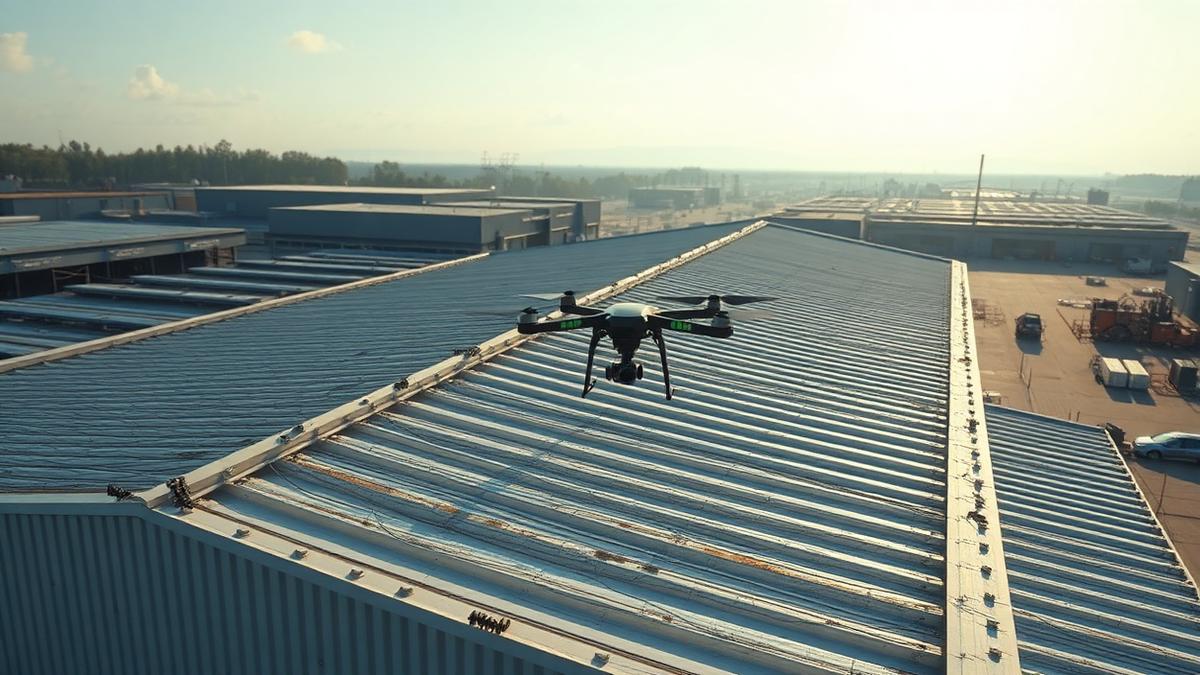
Efficiency gains are most apparent at scale. For high-rise facade cleaning, the time saved by eliminating scaffolding setup and dismantling can reduce total project duration by over 50%, allowing more frequent and less disruptive maintenance cycles.
The model is inherently scalable: a single certified drone pilot can supervise multiple automated units from a central ground station, enabling rapid cleaning of vast surfaces such as logistics park warehouses or extensive solar farms.
A crucial benefit is operational continuity. Drone cleaning can often be performed without interrupting facility traffic or shutting down production — a significant advantage over methods that require cordoning off large areas for safety.
The diagnostic advantage
The unique value proposition offered by advanced providers like AeroWorks lies in integrating cleaning with diagnostic inspection. The drone platform is used not just to clean but to gather critical data on asset health.
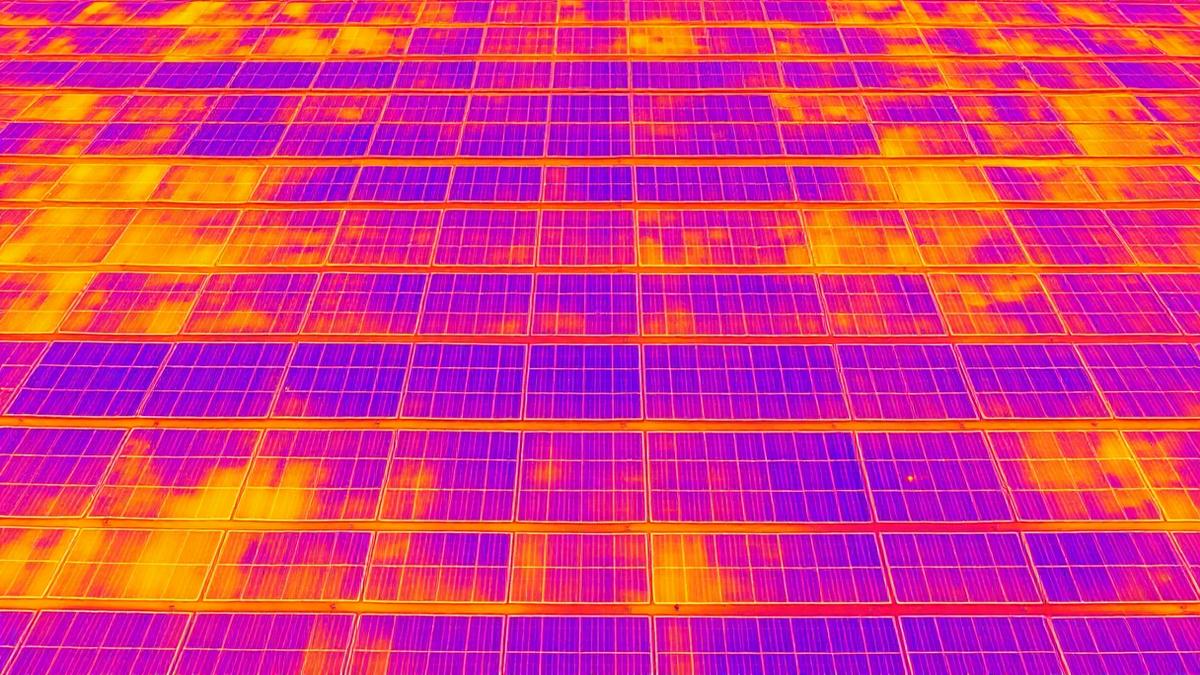
AeroWorks integrates high-resolution thermal scanning with its cleaning protocols to identify anomalies such as hotspots on solar panels, which can indicate defective cells or failing bypass diodes. For solar park operators, simultaneous inspection and maintenance transforms a routine cleaning task into a comprehensive asset health assessment, allowing early detection of failures, maximising energy production, and preventing costly repairs.
The diagnostic data directly informs the cleaning process: thermal data indicating heavy soiling or organic growth can be used to automatically adjust cleaning intensity and chemical application in specific, targeted areas of the asset.
Methodology for solar parks and logistics infrastructure
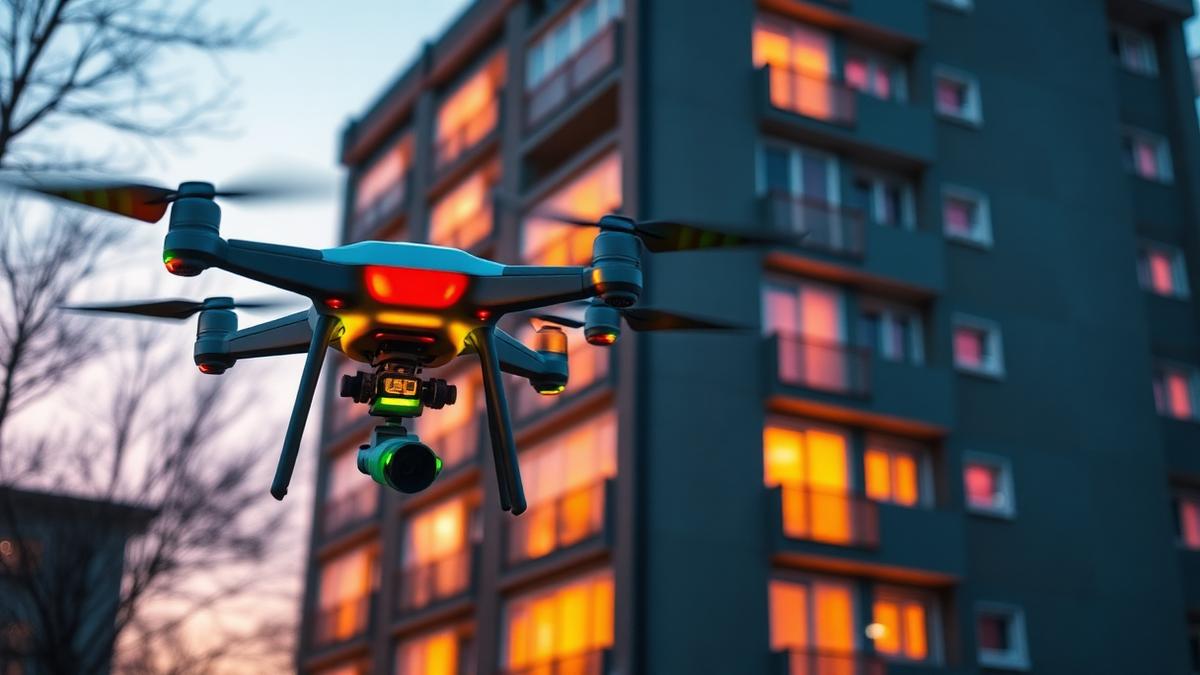
Automated drone cleaning is not a one-size-fits-all solution. A detailed, asset-specific methodology is required to address the operational and technical challenges of different industrial environments — especially for solar parks and logistics infrastructure, two asset classes defined by vast scale and sensitivity to downtime.
Solar park protocol: the primary objective is to maximise energy production by eliminating soiling losses. The protocol involves precision cleaning synchronised with thermal diagnostics so panels are not only clean but also functioning at peak electrical efficiency.
Logistics hubs: for large warehouses and distribution centres, the focus is on maintaining building envelope integrity and corporate presentation standards with minimal disruption to constant site traffic.
Unreachable areas: the drone platform accesses high-altitude or architecturally complex locations that are impractical or impossible with conventional methods, such as intricate industrial pipe racks or communications towers.
Environmental monitoring: in some industrial contexts the service extends to environmental monitoring, such as analysing the health of surrounding forests or vegetation as part of a comprehensive site management plan.
Photovoltaic maintenance and thermal diagnostics
The efficiency of photovoltaic installations depends critically on panel cleanliness. Accumulation of dust, pollen, and debris — soiling — can, according to industry studies, reduce solar panel energy output by up to 30% in certain environments. An automated drone cleaning protocol applies purified water at the correct pressure to remove buildup without damaging sensitive anti-reflective coatings.
Integrating high-resolution thermal imaging during the cleaning flight is a game-changer for PV maintenance. It enables simultaneous detection of micro-cracks, delamination, and defective cells, which manifest as thermal anomalies. Identifying these issues early allows corrective action before significant power loss or cascading failures occur.
The frequency of these integrated maintenance protocols is determined by local dust levels, rainfall patterns, and the specific soiling rate of the site, ensuring a data-driven approach to asset care.
Logistics and warehouse exterior management
The sheer scale of modern logistics parks and distribution centres presents a significant maintenance challenge. Automated drone cleaning is ideally suited to the large vertical surfaces of warehouse exteriors and metal cladding, executing pre-programmed, optimised flight paths for consistent and rapid cleaning of millions of square metres.
This process is critical for maintaining industrial hygiene standards, preventing corrosion, and upholding corporate image.
Operational coordination is a key component of the methodology: drone flights are meticulously scheduled around the hub's traffic management so cleaning does not interfere with truck and personnel movements, eliminating operational downtime for the client.
AeroWorks: integrating precision cleaning with industrial diagnostics
AeroWorks operates not as an equipment vendor but as a technical partner for long-term asset optimisation. The approach is founded on the principle that true automation integrates precision high-pressure washing with actionable diagnostic data, providing a holistic view of asset health and enabling a shift from reactive repairs to predictive maintenance.
Proprietary flight software: developed specifically for the complex demands of industrial asset management, enabling centimetre-level precision in navigation and cleaning execution far beyond off-the-shelf solutions.
Diagnostic synergy: AeroWorks pioneered the integration of high-pressure washing with thermal diagnostic accuracy. Capturing thermal data on a freshly cleaned surface eliminates false readings caused by dirt and debris, providing a clearer and more reliable assessment of asset condition.
National operational reach: with the capability to serve large-scale infrastructure across Romania, AeroWorks provides a consistent, high-quality service standard for clients with national asset portfolios.
Commitment to technical excellence: operations are governed by rigorous industrial maintenance standards, ensuring every project is executed with a focus on safety, precision, and verifiable results.
The AeroWorks service model
The workflow is a structured process designed to deliver predictable, superior outcomes. It begins with a detailed technical assessment of the client's asset, including 3D modelling to identify unique geometries and potential challenges.
Based on that assessment, AeroWorks develops custom software solutions and flight plans tailored to the asset. During automated execution, data is collected in real time, allowing on-the-fly adjustments.
On completion, AeroWorks delivers comprehensive reporting and data analysis, giving clients actionable maintenance insights that inform future planning and investment. Clients receive not just a clean surface, but valuable intelligence for managing their infrastructure.
Future-proofing industrial assets
AeroWorks is committed to shaping the next decade of autonomous aerial maintenance, investing in sustainable, low-impact cleaning technologies and advanced sensor payloads for large-scale energy parks and industrial facilities.
By partnering with AeroWorks, asset managers are not just solving today's maintenance challenges; they are future-proofing their infrastructure against the increasing complexity of the modern industrial landscape, keeping assets productive, compliant, and valuable across their entire operational lifecycle.
Frequently asked questions
Are automated drone cleaning systems safe for sensitive solar panel coatings? Yes. Professional systems use controlled, moderate-pressure water combined with specialised, non-abrasive cleaning agents. The flight software maintains a precise, consistent distance from the panel surface, so applied pressure stays uniform and well within the tolerance limits of anti-reflective and hydrophobic coatings.
How much faster is drone cleaning compared to traditional scaffolding methods? Significantly faster, primarily due to eliminating setup and teardown time. For a large building facade, an automated drone system can reduce total project time by 50–70%, translating to less operational disruption and lower overall project costs.
What are the weather limitations for industrial drone cleaning operations? Operations are typically limited by high winds (generally above 35–40 km/h), heavy precipitation, and freezing temperatures. AeroWorks conducts detailed pre-flight weather analysis and only operates within safe, manufacturer-specified environmental parameters.
Can automated drones perform high-pressure washing on high-rise facades? Absolutely. High-rise facades are a primary application. Tethered drones, which receive continuous power and water from a ground station, are particularly effective because they can operate for extended periods without landing for battery changes.
How does integrated thermal inspection improve solar park ROI? It identifies underperforming or defective panels — hotspots, cracked cells, faulty bypass diodes — during the cleaning process. Early, targeted repairs prevent further degradation and maximise energy output, turning a maintenance cost into an investment in performance.
Is the flight software used by AeroWorks compliant with national aviation regulations? Yes. All flight operations and the proprietary software are designed to be fully compliant with the Romanian Civil Aeronautical Authority (AACR) and broader EASA guidelines for unmanned aerial systems.
What is the maximum height an automated cleaning drone can reach? Maximum operational height is determined more by tether length and regulatory limits than by the airframe. For tethered systems, operating heights of 100–150 metres are standard for high-rise building maintenance, well within legal flight ceilings for most industrial zones.
Does drone cleaning require the facility to shut down operations? In most cases, no. A small, well-defined safety perimeter is established on the ground directly below the work area, but a full facility shutdown is rarely required, allowing logistics and industrial operations to continue uninterrupted.